Columbiana, Ohio: A Model for Youth Engagement and Community Revitalization
By Deb Martin, Program Development Coordinator
Great Lakes Community Action Partnership (GLCAP), one of six regional partners in the Rural Community Assistance Partnership (RCAP) has a long history of providing technical assistance to the City of Columbiana, Ohio (population approximately 7,000), located in east-central Ohio. Our work began with wastewater and water infrastructure improvements and later expanded to include a regional GIS collaboration involving several neighboring communities. With critical infrastructure in place as a foundation, our partnership evolved to encompass broader community and economic development initiatives. By 2019, youth engagement had become an integral component of these comprehensive efforts, all aimed at transforming this disadvantaged and shrinking Appalachian community into a vibrant, thriving place to live, work, and invest.
Columbiana possessed two often-overlooked assets that proved essential to its success. First, the community benefited from exceptional leadership, including proactive elected officials and a forward-thinking City Manager. Second, RCAP’s early community development work helped establish the Columbiana Progress Committee, a collaborative group representing all sectors of the community, including local schools.
The committee’s purpose was to foster coordinated, community-wide efforts and ensure that stakeholders were working toward a shared vision for the future. The importance of these foundational leadership and collaboration structures cannot be overstated; they became the catalyst for many of the community’s subsequent accomplishments.
Our youth engagement efforts began with two weekend sessions of the Startup Experience, an entrepreneurial boot camp that equips students with the confidence, problem-solving abilities, and business-model development skills needed to launch a venture from the ground up. Participants included students from Columbiana High School, a local Christian school, and several neighboring communities involved in our program. Student feedback was overwhelmingly positive, and we highly recommend the program as an effective tool for youth engagement and leadership development.
Building on the success of those sessions and a growing partnership with local schools, City Manager Lance Willard connected with a teacher who led a Creative Entrepreneurship class at Columbiana High School. Traditionally, students in the class spent the school year helping a local business solve a challenge. Mr. Willard proposed a different approach: partnering with community leaders to address a local issue with broader public impact.
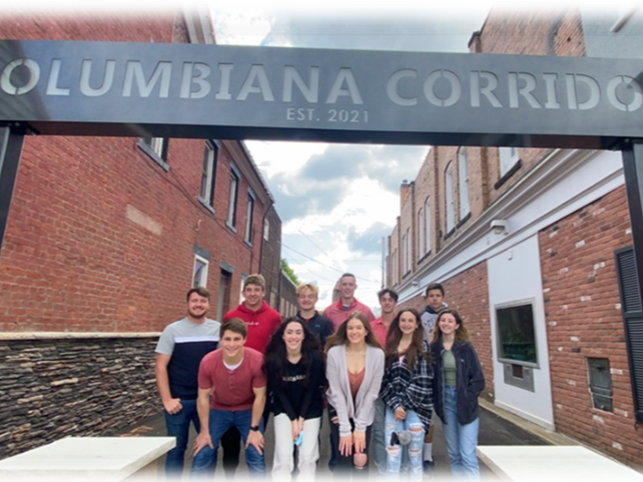
The first project focused on transforming an underutilized downtown alley into a community gathering space. The initiative emerged during the height of the COVID-19 pandemic, when local restaurants were struggling due to limited outdoor seating opportunities. Students collaborated to develop a practical and attractive solution and ultimately presented their proposal to the Mayor and City Council.
Their vision included closing the alley to vehicle traffic and creating an inviting public space featuring outdoor seating, an overhead canopy, a community whiteboard for messages and artwork, and a public restroom. After conducting a naming contest within the school, students selected the name “The Columbiana Corridor.”
Community leaders quickly embraced the proposal. The city closed the alley and utilized funding from its Covid recovery funds to construct the restroom on Main Street and secured funding through the local community foundation to add seating and install other amenities. A local manufacturer donated a custom sign for the project. The result was a vibrant public gathering space that provided critical support to downtown businesses during a challenging period and created a lasting community asset.
The project attracted statewide attention. Ohio Superintendent of Public Instruction Pablo DeMaria visited Columbiana High School and praised the initiative, stating:
“Here’s an educational experience that doesn’t fit into our usual buckets because it brings all the buckets together in a way that’s really relevant. I love the fact that it’s being done in partnership with the city.”
Students also gained valuable public speaking and leadership experience through interviews with local media outlets and presentations to outside audiences. They were even invited by the Carnegie Institute in Pittsburgh to share their work with Pennsylvania communities interested in replicating the model.
The success of the Columbiana Corridor convinced both school and community leaders to continue the partnership. Mayor Rick Noel highlighted one of the most important lessons from the experience: if communities ask young people for their ideas, they must be prepared to act on those ideas. Meaningful youth engagement requires more than simply soliciting input—it requires demonstrating that youth contributions can influence real decisions and produce tangible outcomes.
Subsequent student-led projects have included improvements to the Firestone Park concession stand, the addition of two public murals, and enhancements to the Columbiana Plaza parking lot that increased parking capacity and improved the downtown experience.
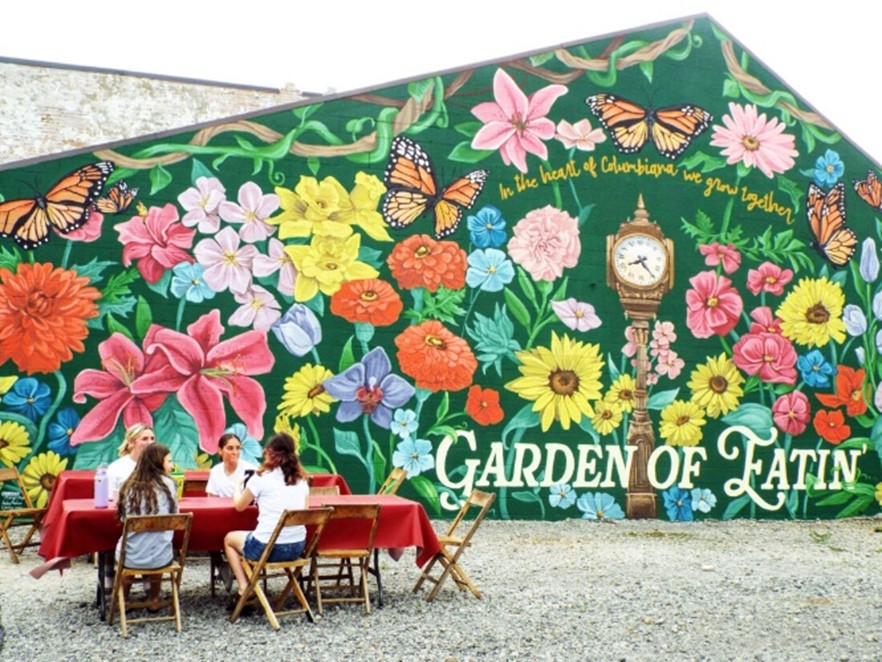
Most recently, students have turned their attention to an ambitious project known as the Garden of Eatin’. Under development since Fall 2023, the Garden of Eatin’ is transforming an underutilized vacant lot on Main Street into an inclusive gathering space featuring dining areas, food truck hookups, and community entertainment opportunities. Located directly across from the Columbiana Corridor, the project is expected to further strengthen downtown activity and contribute to the development of a vibrant Main Street destination.
The design incorporates flexible spaces that can accommodate a variety of events throughout the day and evening. Significant progress has already been made. A large mural has been completed, food truck infrastructure has been installed, and construction continues. The project has benefited from a $50,000 T-Mobile Hometown Grant, which students played a key role in securing.
There also are plans in a later stage of the Garden of Eatin’ project to install a concession stand by placing a cargo container on a concrete base. The students outlined how they planned to creatively tie in the mural to the road crossing by painting flowers in the crosswalks carefully not to distract either vehicle or pedestrian traffic.
The Columbiana tourism board also is installing a 55-inch tall weather kiosk at the location.
In all there are six phases associated with the Garden of Eatin’ project, with the mural and stage just encompassing the first.
As with past classes, these students were able to present their project to an auditorium full of other community leaders from the area, in hopes of spreading the model far and wide to other communities. Already, four of the county’s other communities have adopted the model and are making plans of their own.
Perhaps the most important outcome of these efforts is their impact on local youth. When students who participated in these projects were asked whether they felt more connected to the community and more likely to return to Columbiana in the future, every student responded affirmatively.
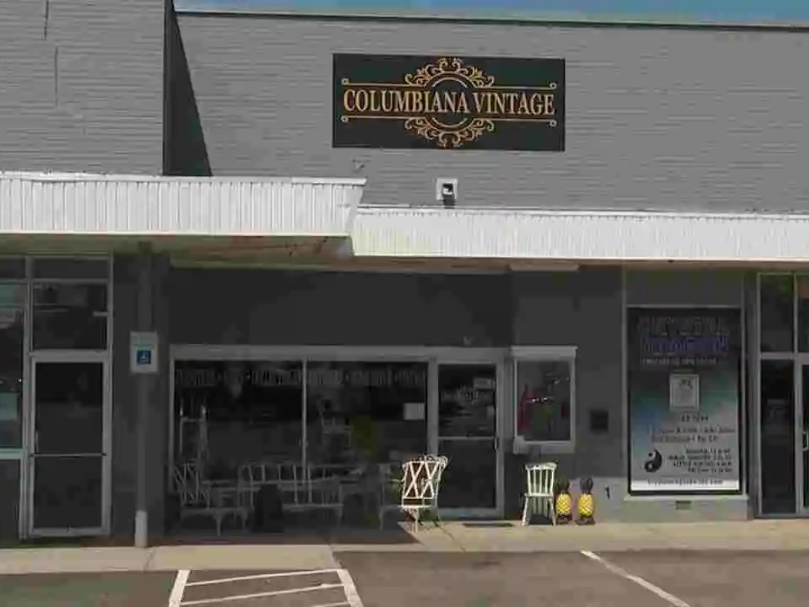
The impact of these efforts has come full circle. One of the students who participated in the original Creative Entrepreneurship project, Zhenya Motry, is now a downtown business owner, operating Columbiana Vintage Antiques.
Today, he is working alongside community leaders to develop and manage a series of events designed to bring even greater energy, activity, and economic vitality to downtown Columbiana. His journey from student participant to business owner and community champion demonstrates the long-term value of investing in youth engagement and creating meaningful opportunities for young people to shape the future of their hometown.
At a time when many rural communities struggle to retain and attract young talent, that result may be the greatest accomplishment of all. By giving young people meaningful opportunities to shape the future of their community, Columbiana has not only created valuable public spaces—it has fostered a new generation of engaged citizens who see themselves as part of the community’s future.